


The northern or common raccoon (Procyon lotor), typically just referred to as raccoon and in more recent years as trash panda, is one of North America’s most successful mammal species. Originally an inhabitant of mixed forests associated with wetlands it now occurs from southern Canada, south to Panama, and across the entire United States, and is only absent from small portions of the Rocky Mountains and southwestern deserts. Additionally, it has been introduced into western Eurasia, Japan, and some Caribbean islands. With keen intelligence, dexterous hands, and an omnivorous diet, the raccoon is now able to thrive in virtually any habitat, including the densest cities.

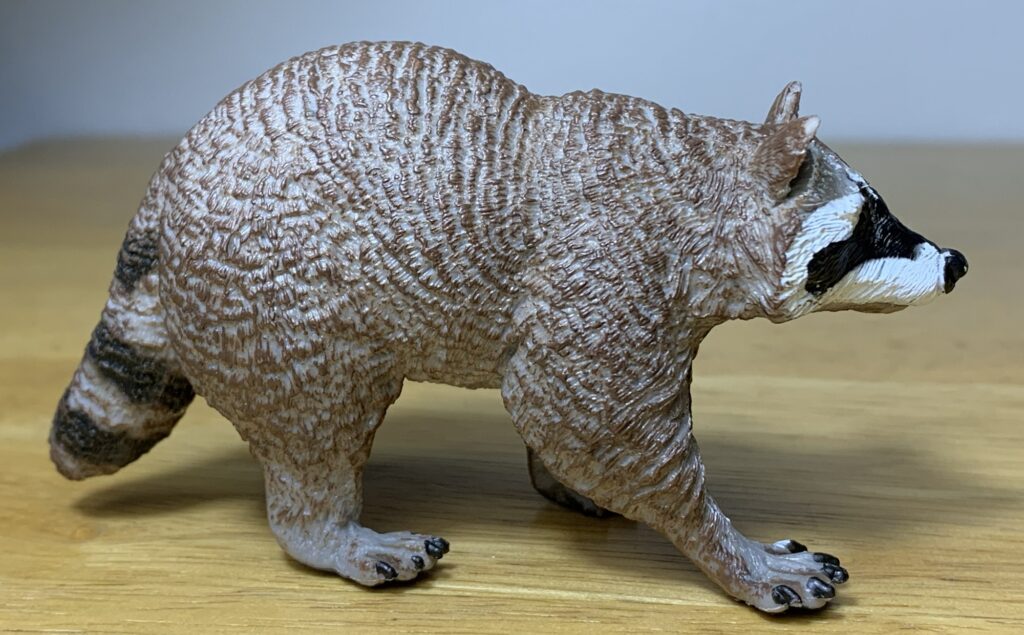
Raccoons are the largest members of the Procyonidae family, an unusual assortment of carnivorans that includes ringtails, coatis, and kinkajous. Three species of raccoons are currently described, the northern, pygmy, and crab-eating raccoons. Today we’re looking at the Safari Ltd. raccoon, part of their North American Wildlife series. It was sculpted by Doug Watson, released in 2009 and is still in production. ToyAnimalWiki erroneously lists it as retired in 2019.
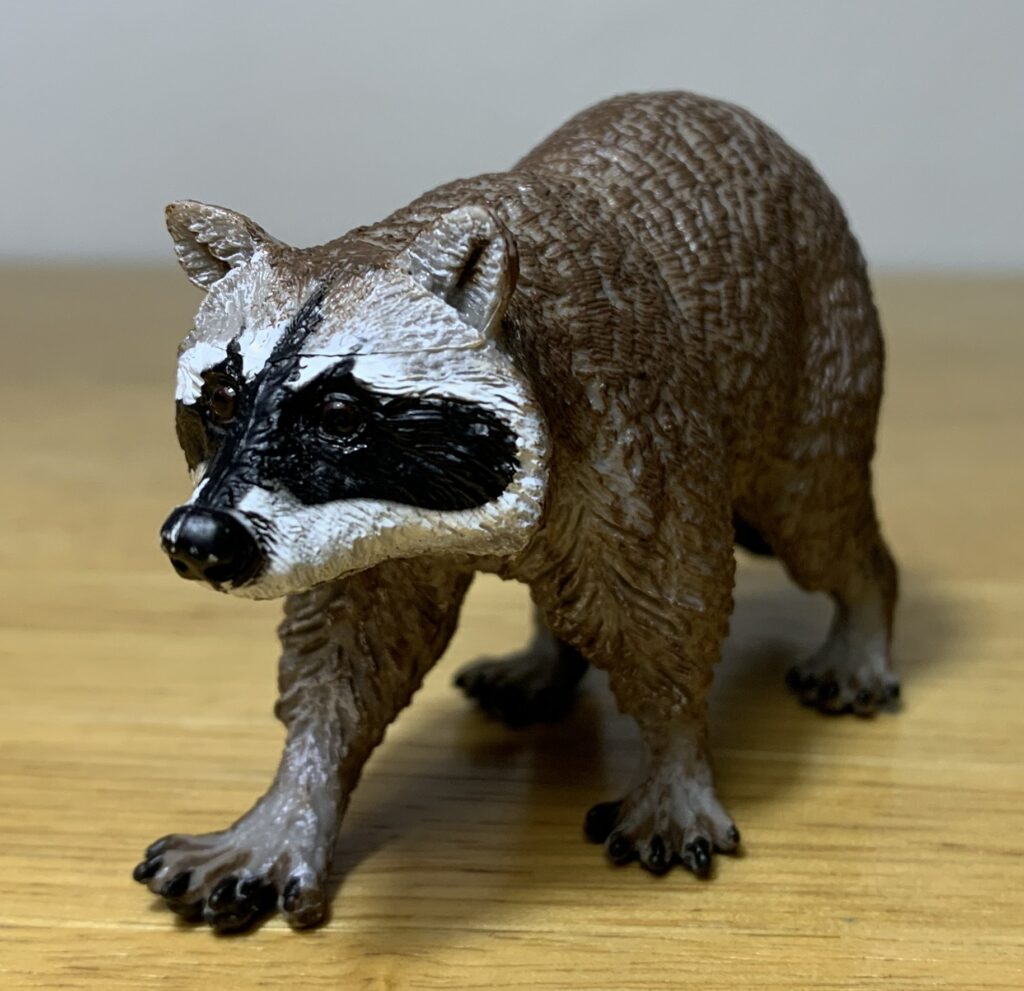
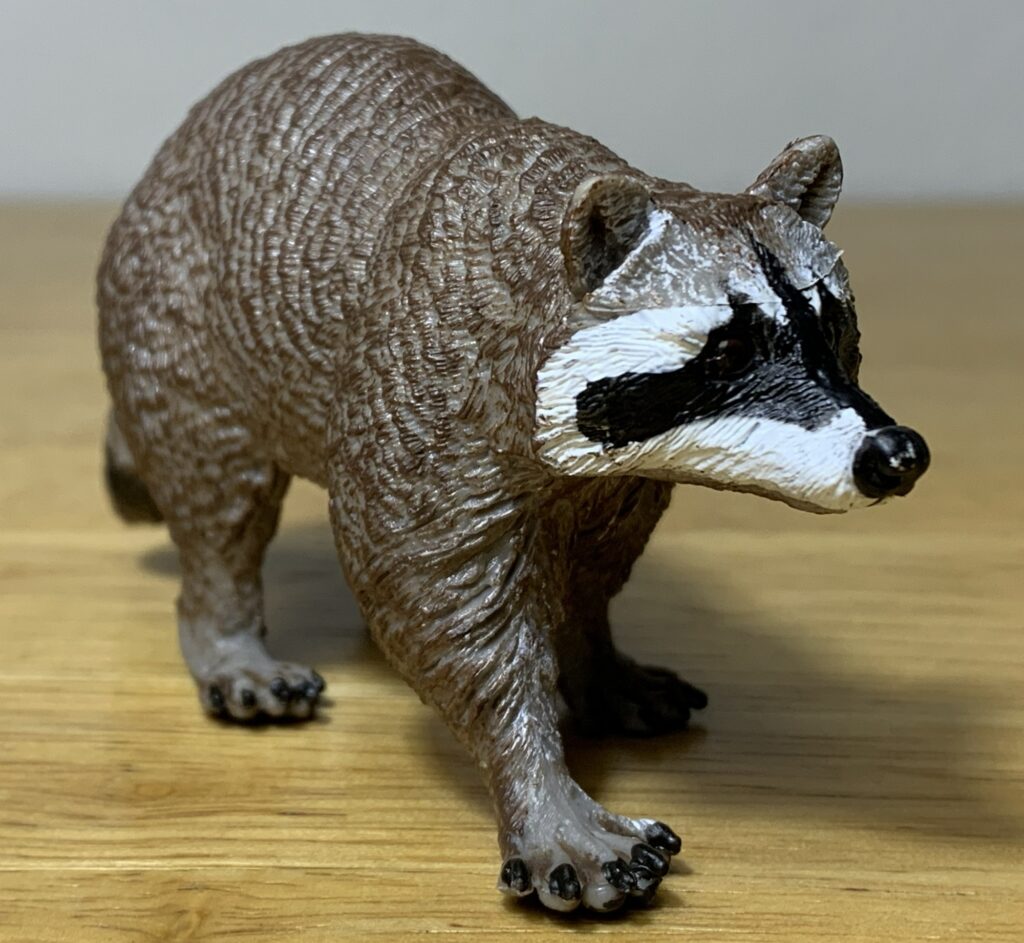
Northern raccoons have a head-body length of 17-24” (44-62 cm) but that obviously doesn’t include the tail. They can weigh between 3.7-24 lbs. (1.7-11 kg) with males being larger than females. Exceptional specimens can weigh as much as 61 lbs. (28 kg) and a raccoon of that size must be quite the sight! Raccoons follow Bergmann’s rule, where animals living in colder climates reach larger sizes than those in warmer climates. The Safari raccoon has a total length of 4” (10.16 cm) and measures 3.5” (8.89 cm) if we subtract the tail. It stands 2” (5.08 cm) tall at the shoulder. Using head-body length we get a scale of 1/4.8-1/6.8. The figure is a bit larger than I would like and looks unusual when displayed next to other North American mammals. It’s nearly the size of my bears!
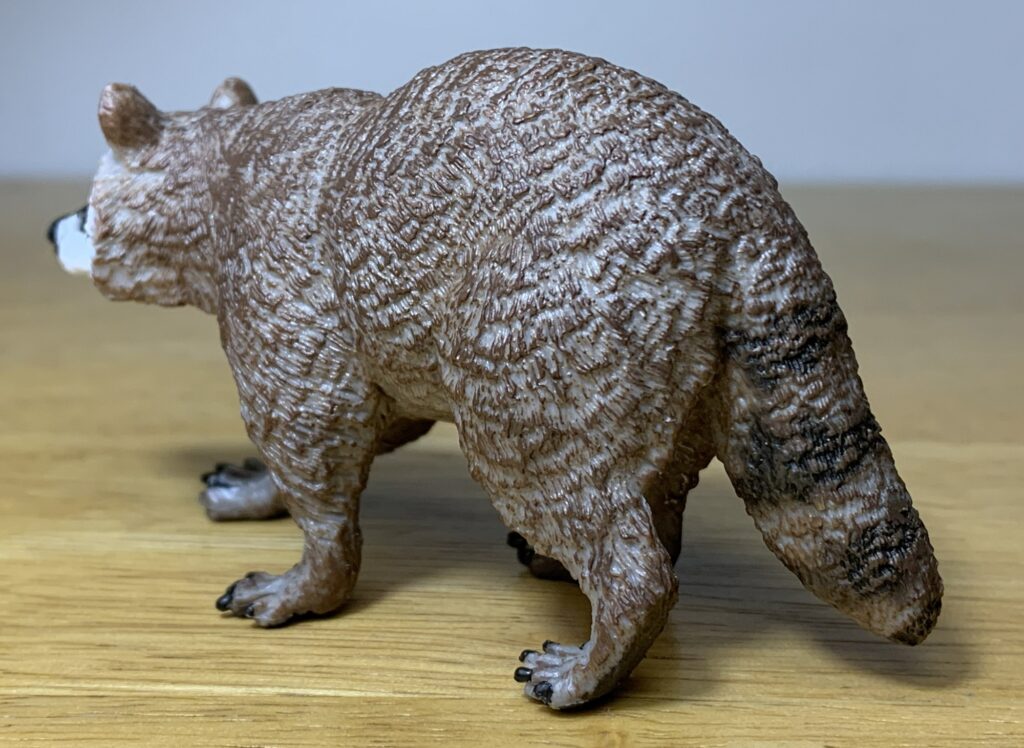

The Safari raccoon is positioned in a static pose with the limbs on the right forward of those on the left, the head looking directly forward, and the tail drooping down. The heel of the left foot is slightly lifted, implying forward motion. The face is wide with ruffs of fur, with a pointed snout, and forward-facing eyes. The body is stoutly built with a sloping back, plantigrade paws, and a bushy tail. The excellent fur texturing gives the illusion of a thick coat, suggesting that this raccoon is sporting its winter pelt. The inside surface of the nimble paws are nicely detailed.
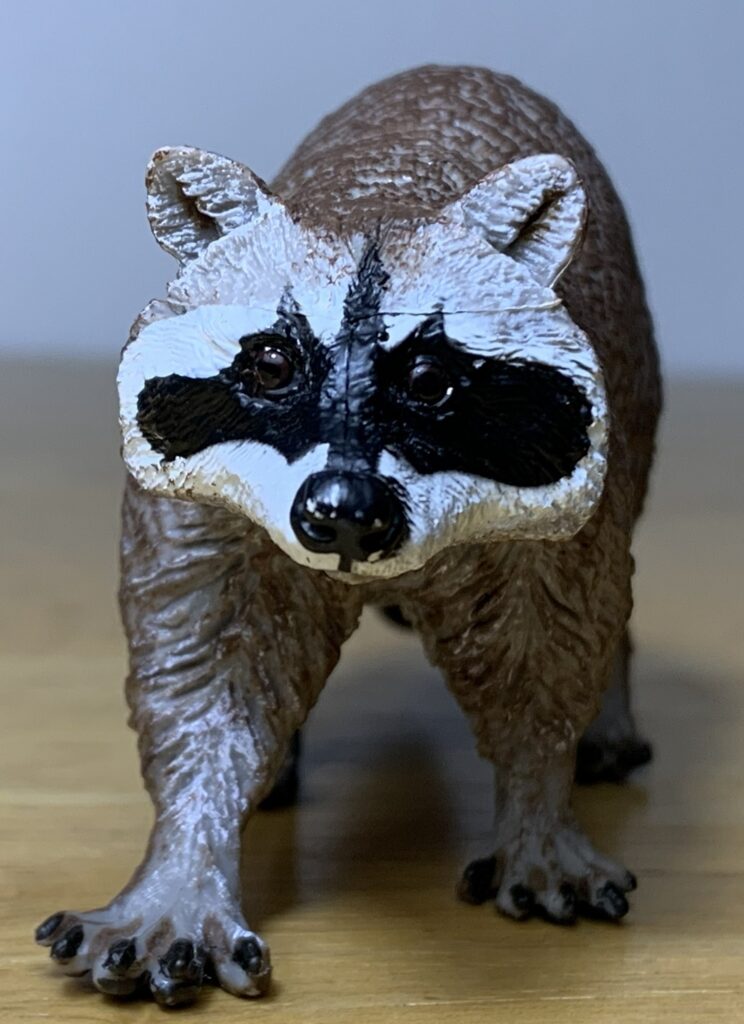

The fur is painted in grizzled gray and brown and the brown wash over the gray base gives the coat some added depth, black bands run down the tail. The face is white with a crisp, nicely applied bandit mask over the eyes. In life, it’s thought that the mask improves their night vision by reducing glare. The eyes are dark brown with black pupils and a shiny finish. The nose is black, the mouth is outlined in black, and the inside surface of the paws are black. This is a fantastic paintjob with excellent application. It shows the raccoon’s typical coloration, but raccoons can vary in color from blonde, to cinnamon, to nearly black.

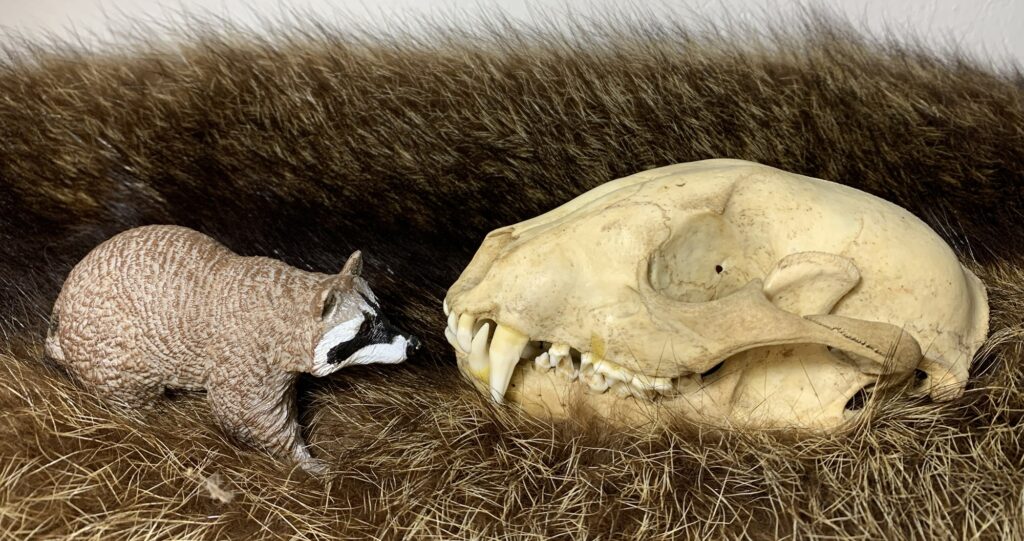
When it comes to raccoons there’s a glut of figures to choose from, Schleich even has one coming out next year! But it’s hard to compete with a Doug Watson sculpt and this has to be the best sculpted raccoon available. It’s a bit large but scales are all over the place in my collection anyway, so it’s acceptable. This figure is widely available online, including on Safari’s website.
